
Best Toys for 2-Year-Olds with Autism

It's 11:47 p.m. and you're still scrolling. Your toddler had a rough day, another meltdown at snack time, another moment where you weren't sure if he heard you or just wasn't ready to respond. So here you are, searching for “toys for 2-year-olds with autism”, hoping that maybe, just maybe, the right toy could make tomorrow a little easier. A little more connected.
You're not alone in this search, and you're not doing anything wrong by looking. Two is such a tender age. Some days your child seems right on the edge of a new skill, and other days everything feels like a struggle. The good news is that play really can help, not because any single toy is magic, but because the right toys give your child low-pressure ways to practice attention, communication, and connection at their own pace.
Below are 10 toys many parents and early intervention providers turn to for two-year-olds with autism, along with why they tend to work so well and what developmental skills they can support.
What to Look for When Choosing Toys for a 2-Year-Old with Autism
Before we get to the list, it helps to know what actually makes a toy "autism-friendly" at this age. You don't need anything labeled special needs or therapeutic. You're mostly looking for:
Predictable cause and effect. When a toy does the same thing every time (press a button, hear a sound), it builds trust and encourages your child to try again.
Simple, single-step actions. At two, toys that require one clear motion (stack, sort, push) are easier to access than toys with lots of moving parts.
Sensory feedback that feels good. Textures, gentle resistance, sound, or light can be motivating, especially for kids who are still building tolerance for new sensations.
Room for repetition. Many autistic toddlers learn through repeating an action over and over. A good toy can be played with the "same way" fifty times and still be useful.
Natural opportunities to look at you. Toys that pause and wait for your child's input (not just automatic, non-stop toys) create small windows for eye contact and joint attention.
Keep in mind that no single toy will "fix" a skill overnight, and that's okay. These are tools to make everyday play a little more accessible, not a checklist to complete.
1. Melissa & Doug Shape Sorting Cube

This classic wooden cube has shaped openings on each side and matching chunky pieces to drop inside. It's simple, sturdy, and holds up to years of play.
Why autistic toddlers often enjoy it: The one-to-one correspondence (this shape goes in this hole) is clear and predictable. There's no ambiguity about what "success" looks like, which can feel calming for kids who thrive on clear rules.
Developmental skills it may help support: Fine motor grasp, shape and color recognition, problem-solving, and turn-taking if you play alongside your child and hand pieces back and forth.
2. Fat Brain Toys Dimpl
Dimpl is a small silicone toy with bubbles that pop in and out, similar in feel to a fidget popper but
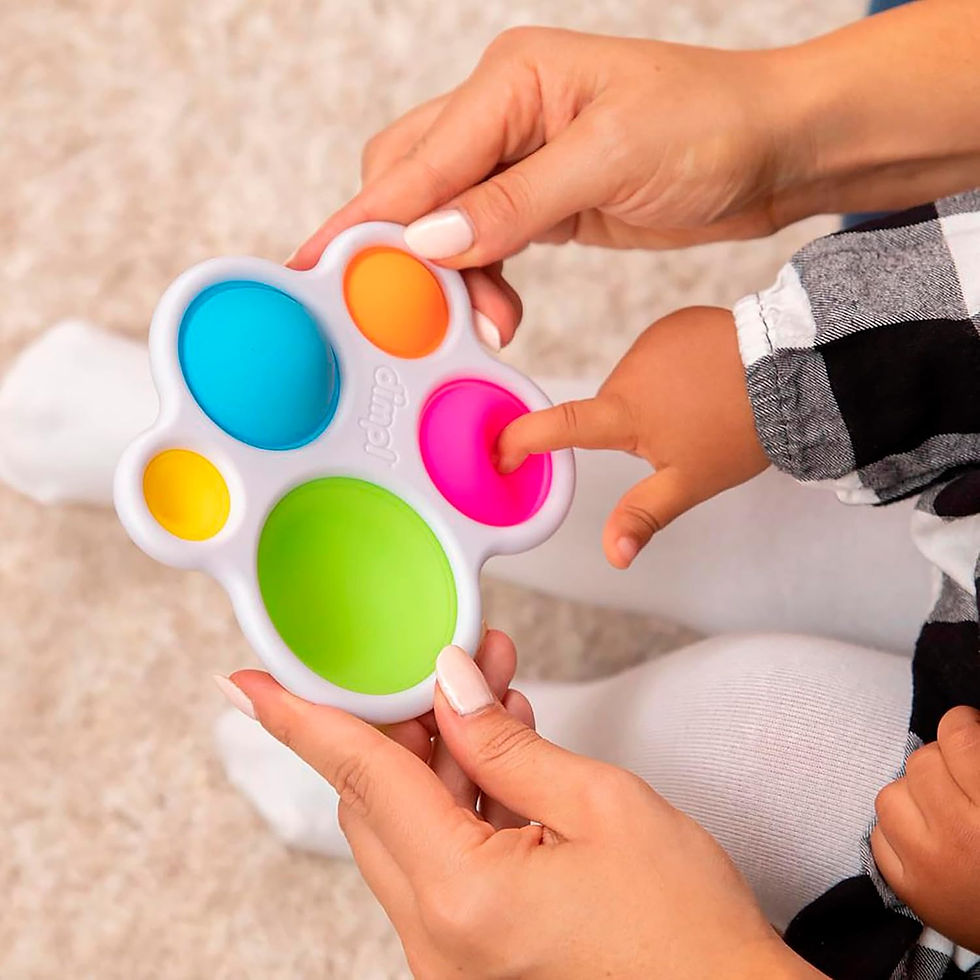
designed for little hands.
Why autistic toddlers often enjoy it: The satisfying resistance and quiet "pop" sound offer immediate sensory feedback every single time. It's repeatable in a way that feels soothing rather than overstimulating.
Developmental skills it may help support: Fine motor strength (pincer grasp), cause and effect understanding, and self-regulation through repetitive, predictable movement.
3. Spike the Fine Motor Hedgehog
Spike is a wooden hedgehog with holes for placing colorful spikes, which can also be sorted by color

into included cups.
Why autistic toddlers often enjoy it: It combines a favorite sensory action (poking and placing) with a clear visual goal. Many toddlers find the repetitive insertion motion genuinely calming.
Developmental skills it may help support: Fine motor pincer grasp, color sorting and matching, early categorization skills, and sustained attention to a single task.
4. Mega Bloks First Builders
Oversized, easy-to-connect blocks that are simple enough for toddler hands but open-ended enough to

support imaginative building later on.
Why autistic toddlers often enjoy it: The large size makes success easy and frustration-free. Building and knocking down can also become a favorite shared activity, especially if your child enjoys the crash.
Developmental skills it may help support: Fine and gross motor coordination, imitation (watching you build, then copying), early imaginative play, and joint attention during shared building.
5. Fisher-Price Smart Stages Puppy
This interactive plush puppy has buttons that trigger songs, phrases, and games, with settings that

grow alongside your child's developmental stage.
Why autistic toddlers often enjoy it: The predictable button-to-response pattern is easy to understand, and many children enjoy the repetition of favorite songs and phrases.
Developmental skills it may help support: Early language exposure, cause and effect, imitation of gestures like clapping or patting, and comfort through a repeatable, familiar "friend."
6. Green Toys Stacking Cups

A simple, durable set of stacking cups made from recycled plastic, useful in the bath, sandbox, or on the living room floor.
Why autistic toddlers often enjoy it: Stacking cups offer endless repeatable play (stack, knock down, repeat) without any "wrong" way to use them, which lowers pressure and frustration.
Developmental skills it may help support: Fine motor coordination, size sequencing, early math concepts (big and small), and parallel or turn-taking play with a caregiver or sibling.
7. Melissa & Doug Wooden Puzzles

Simple wooden puzzles with large knobs that make pieces easy to grip and place into matching outlines.
Why autistic toddlers often enjoy it: The visual matching task is concrete and clear, and the knobs remove the fine motor barrier that flat puzzle pieces can create at this age.
Developmental skills it may help support: Fine motor grasp, visual discrimination and matching, vocabulary building (naming the pictures), and independent task completion.
8. Squigz Starter Set

Squigz are silicone suction pieces that stick to smooth surfaces (tables, windows, tubs) and pull apart with a satisfying pop.
Why autistic toddlers often enjoy it: The tactile suction and the "pop" sound provide rich sensory feedback, and sticking pieces to vertical surfaces adds novelty many toddlers find motivating.
Developmental skills it may help support: Fine motor strength, cause and effect, spatial awareness, and shared play when you take turns sticking and pulling pieces together.
9. VTech Sit-to-Stand Walker

A push walker with an attached activity panel of buttons, lights, and songs, designed to support early walking and standing play.
Why autistic toddlers often enjoy it: It offers movement and music together, which can be a great outlet for toddlers who seek motion or need a way to move while still engaging with an activity panel.
Developmental skills it may help support: Gross motor development (walking, balance), cause and effect, early language through songs and phrases, and body awareness.
10. Battat Pop-Up Pals

A classic pop-up toy where turning, sliding, or pressing a mechanism makes a hidden animal spring up from behind a door.
Why autistic toddlers often enjoy it: The anticipation-and-surprise pattern is highly repeatable, and once your child learns what to expect, the predictability itself becomes part of the fun.
Developmental skills it may help support: Fine motor manipulation (turning, sliding, pressing), object permanence, anticipation and joint attention (looking to you right before the pop), and early cause and effect language ("uh oh," "pop," "again").
You Know Your Child Best
If you take one thing from this list, let it be this: you don't need every toy on this page, and you don't need to force interest in anything your child isn't drawn to. Watch what naturally catches their eye or their hands, then build on that. A toy is doing its job if it's opening even a small window for connection, whether that's a shared glance, a giggle, or a moment of focus that lasts longer than you expected.
Looking for More Support Beyond Toys?
Play is a powerful tool, but it's just one piece of your child's development. If you're in the Bay Area and raising a child between the ages of 2 and 5, our morning in-home ABA therapy sessions are designed to meet your child where they are, in the comfort of your own home, at a time of day when many toddlers are most regulated and ready to learn. If you're curious what early intervention could look like for your family, we'd be glad to talk it through with you.
Frequently Asked Questions
What are the best toys for a 2-year-old with autism?
Toys that offer clear cause and effect, simple one-step actions, and satisfying sensory feedback tend to work well, such as shape sorters, stacking cups, and sensory pop toys like Dimpl or Squigz.
Do autistic toddlers need special toys?
Not necessarily. Many toys that work well for autistic toddlers are mainstream toys that happen to be predictable, repeatable, and sensory-friendly. The key is choosing based on your child's individual interests and sensitivities, not a specific label.
What toys help a nonverbal 2-year-old communicate?
Toys that pause and wait for input, like button-activated toys or pop-up toys, create natural opportunities for your child to request "more" through gestures, sounds, or eventually words, with your support and modeling.


