Best Black Friday Toys for Autistic Toddlers 2026: 5 Deals Worth Watching

It's late, the house is finally quiet, and you have about forty browser tabs open. Every one of them is shouting about doorbusters and lightning deals. Meanwhile, you're trying to answer a much smaller, much more personal question: what will my child actually play with?
If you're the parent of an autistic toddler, holiday shopping can feel different. You've probably bought the toy everyone raved about, only to watch it sit untouched in the corner. You may have a child who loves one thing intensely, gets overwhelmed by flashing lights and loud sounds, or prefers lining things up to playing with them the "right" way. So when you search for Black Friday toys for autistic toddlers, you're not really hunting for the lowest price. You're hunting for the toy that might finally click.
That's what this guide is for. Below are five toys that many families and early intervention providers come back to again and again for children ages 2 to 5. They're simple, durable, and open-ended. They also tend to go on sale during the Black Friday and Cyber Monday window, which makes this a smart time to stock up on toys that support real skills instead of toys that just make noise.
No single toy is magic, and you don't need all five. But the right toy, offered at the right moment, can create small openings for shared attention, back-and-forth play, and connection. Those small openings matter more than any discount ever will.
If you're looking for a longer list beyond the holidays, our guide to the 10 best toys for nonverbal children has been a favorite with parents, and you'll find age-specific picks in our posts on toys for 2-year-olds with autism and toys for 3-year-olds with autism.

What Should Parents Look for When Buying Toys for an Autistic Toddler on Black Friday?
The best Black Friday toys for autistic toddlers are simple, predictable, and open-ended, and they invite you to play alongside your child. A big discount on the wrong toy is still the wrong toy, so it helps to walk into the sales with a short checklist.
Predictable cause and effect. Toys that do the same thing every time (push, pop, click, stack, fall) feel safe and rewarding. Predictability builds confidence and encourages your child to try again.
Calm sensory input. Many autistic toddlers are sensitive to sound and light. Look for toys without flashing screens or loud electronic songs, or toys that let your child control the sensory experience with their own hands.
Open-ended play. Blocks, tiles, and sorters can be used a dozen different ways. That flexibility meets your child where they are today and grows with them next year.
Room for two. The most valuable toys are the ones you can share. A toy that naturally invites turn-taking, "my turn, your turn," or a playful pause creates chances for joint attention and communication.
Durability. Toddlers mouth, throw, and test everything. Sturdy wood, thick plastic, and silicone hold up through months of repetition (and repetition is how skills grow).
A match for your child's interests. If your child loves colors, spinning, building, or lining things up, lean into that. Following your child's lead is usually far more effective than buying for an age label alone.
One more tip: resist the urge to buy everything at once. A few well-chosen toys, rotated in and out every week or two, often get more play than a full shelf. For more on how play skills develop over time, our article on parallel play vs. interactive play is a helpful read.
A Quick Note on Black Friday Prices
Black Friday prices change quickly, sometimes several times in a single day, so always check the current price on Amazon before you buy. We don't list exact prices in this guide for that reason. A deal that looks great in the morning can sell out by lunch, and a toy at full price today may drop the following week.
A few simple habits can help you shop with less stress:
Add toys to your cart or wish list early. It's an easy way to keep an eye on price changes without opening a dozen tabs at midnight.
Compare against the usual price. A "deal" is only a deal if it's lower than what the toy normally costs.
Watch the whole window. Many of the best toy discounts show up during the full Black Friday through Cyber Monday stretch, not just on Friday itself.
Don't panic-buy. If a toy sells out, there will be another sale. Your child's development doesn't depend on any single purchase.
With that in mind, here are five toys worth watching this season.
5 Black Friday Toy Deals for Autistic Toddlers Worth Watching in 2026
1. Magna-Tiles Classic 32-Piece Set
Magna-Tiles are translucent, colorful magnetic tiles in squares and triangles that click together to make walls, towers, and simple 3D shapes. They're one of the most-loved open-ended toys for preschoolers, and the Classic 32-piece set is a manageable starting size. The maker rates them for ages 3 and up, so if your child is younger or still mouths toys, play together and supervise closely.
Why many autistic toddlers enjoy it: The magnets give a satisfying, predictable "click" every time, and the translucent colors glow when light shines through them. Many children love building a tower and knocking it down, or laying tiles flat in patterns and color rows. There's no wrong way to play.
Skills it can help develop:
Fine motor: grasping, aligning edges, and placing tiles with control
Joint attention: looking at a tower together and sharing the excitement when it falls
Imitation: copying a simple structure you build first
Language: modeling words like "up," "more," "square," "blue," and "crash!"
Problem solving: figuring out how shapes fit together

2. Fat Brain Toys Dimpl
Dimpl is a simple frame with soft, brightly colored silicone bubbles your child can push and pop through from either side. It's small, quiet, and easy to toss in a diaper bag, which makes it a favorite for waiting rooms, car rides, and therapy sessions alike.
Why many autistic toddlers enjoy it: Dimpl offers calm, repetitive tactile input with no sounds or lights. Pushing the bubbles in and out is soothing for many children who seek touch and pressure, and the result is immediate and predictable. For some toddlers, it becomes a go-to regulation tool during transitions.
Skills it can help develop:
Fine motor: isolating the index finger and using a pointing poke (an early building block for pointing to communicate)
Self-regulation: a calming, hands-on activity during busy or stressful moments
Turn-taking: "You pop one, I pop one"
Language: colors, "push," "pop," and counting

3. Learning Resources Spike the Fine Motor Hedgehog
Spike is a friendly plastic hedgehog with chunky, colorful quills that fit into holes on his back. When playtime is over, the quills store inside his body. It's a simple design, but there's a lot of learning packed into it.
Why many autistic toddlers enjoy it: The task is clear and finishable. Put a quill in, see it stand up, repeat until Spike is "full." Many children love the order and completion of it, along with sorting the quills by color. That built-in sense of "all done" can feel deeply satisfying.
Skills it can help develop:
Fine motor: pincer grasp, wrist control, and hand-eye coordination
Matching and sorting: grouping quills by color
Following simple directions: "Put in the red one"
Language: colors, "in," "out," and counting quills
Shared play: taking turns adding quills to the same hedgehog

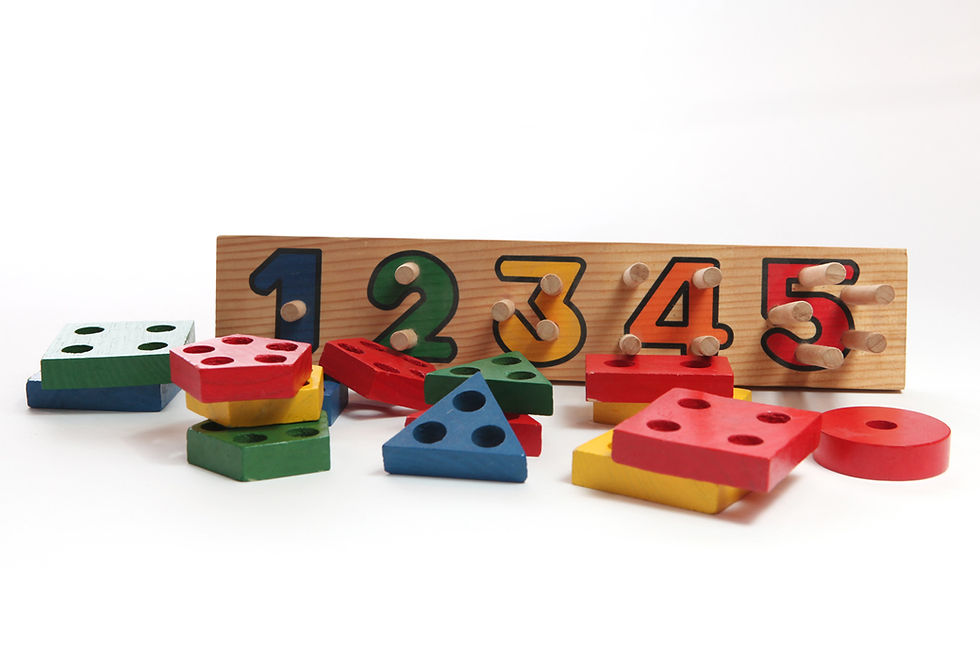
4. Melissa & Doug Wooden Shape Sorting Cube
This classic wooden cube has a different set of shaped holes on each side and a set of chunky wooden shapes to drop through. Open the lid, dump them out, and start again. It's sturdy, quiet, and has been a toddler staple for good reason.
Why many autistic toddlers enjoy it: Shape sorters are predictable and visual. Each shape has exactly one right place, and the clunk of a block dropping inside is rewarding. Many children who enjoy order, matching, and repetition are drawn to this kind of puzzle-like play.
Skills it can help develop:
Visual discrimination: noticing the difference between a star, a circle, and a triangle
Fine motor: rotating shapes to fit through the opening
Persistence and problem solving: trying again when a shape doesn't fit
Requesting: holding shapes so your child can ask for "more" or "star" with a word, sign, or gesture
Language: shape names, "in," and "open"

5. Mega Bloks First Builders Deluxe Building Bag
This bag of big, chunky blocks is sized for small hands and easy to snap together and pull apart. It comes in its own storage bag, which makes cleanup simple (and cleanup can become its own fun game).
Why many autistic toddlers enjoy it: The large blocks are easy to handle, so toddlers get success quickly without frustration. Many children love stacking tall towers, sorting blocks by color, or lining them up in long rows. The blocks are quiet and sturdy, and they can be used the same way every day or in new ways as play grows.
Skills it can help develop:
Fine and gross motor: pushing blocks together and pulling them apart with both hands
Imitation: copying a simple two- or three-block build
Joint attention: building one tower together and cheering when it topples
Early pretend play: turning a tower into a house, a car, or a bridge
Language: "on," "off," "big," "tall," and "uh oh!"

How Can You Get the Most Out of New Toys After the Holidays?
The toy itself is only half of it. The other half is you, sitting on the floor, playing alongside your child. Here are a few gentle ways to turn a new toy into a chance to connect:
Introduce one toy at a time. A pile of new boxes can be overwhelming. Let your child explore one toy for a few days before adding the next.
Follow their lead. If your child wants to line up the Mega Bloks instead of stacking them, join the line. Meeting them in their play builds trust and attention.
Get face to face. Sit at your child's level so they can see your face, your expressions, and the toy at the same time. This makes shared attention easier.
Pause on purpose. Hold the next shape or quill for a moment and wait. That small pause gives your child a reason to look at you, reach, gesture, or use a word.
Keep your language simple. Short phrases like "push," "more blocks," or "tower fell!" are easier to understand and imitate than long sentences.
Celebrate small wins. A glance, a reach, a giggle, or a shared look at a falling tower all count. These moments are the foundation for communication.
It's also completely normal if a toy doesn't land right away. Put it away for a couple of weeks and try again. Children change quickly at this age, and a toy that's ignored in December may become a favorite by February.
Looking for Early Intervention Support in the Bay Area?
The right toys can open small doors, but you don't have to figure out the rest on your own. If you're a Bay Area parent with a child between 2 and 5 and you're wondering whether early intervention could help, we're here to talk it through.
Celeration ABA provides morning in-home ABA services for young children across the Bay Area. Our sessions happen where your child is most comfortable, using the toys and routines they already know (yes, including that new Magna-Tiles set). We focus on play, communication, and connection, and we work alongside parents every step of the way.
This holiday season, give yourself a gift too: a little clarity. Reach out to learn more about morning in-home ABA for your family. There's no pressure, just a conversation.
Frequently Asked Questions About Black Friday Toys for Autistic Toddlers
What are the best Black Friday toys for autistic toddlers?
The best Black Friday toys for autistic toddlers are simple, open-ended toys with predictable results and calm sensory input. Magnetic tiles, chunky building blocks, shape sorters, fine motor sorting toys, and quiet tactile toys like Dimpl are all popular choices for children ages 2 to 5.
Are sensory toys usually discounted on Black Friday?
Often, yes. Toys are one of the most heavily promoted categories during Black Friday and Cyber Monday, and many popular sensory and developmental toys see price drops. Discounts vary by brand and retailer and can change several times a day, so check the current price before you buy.
When does Amazon Black Friday start?
Black Friday is always the Friday after Thanksgiving, which falls on November 27 in 2026, and Cyber Monday follows on November 30. Amazon usually starts its Black Friday deals about a week before Thanksgiving, so watch the full week leading up to it. Check Amazon's site for this year's confirmed dates.
Do autistic toddlers need special "autism toys"?
No. Most of the best toys for autistic toddlers are everyday toys that many young children enjoy. What matters most is choosing toys that fit your child's interests and sensory preferences, and playing together.
Are these toys good for nonverbal toddlers?
Yes. Each of these toys can be enjoyed without words and creates natural chances to gesture, point, reach, or request. For more ideas, see our guide to the 10 best toys for nonverbal children.
How many toys should I buy for an autistic toddler?
Fewer is often better. Two or three well-chosen toys, rotated every week or two, usually get more meaningful play than a large pile introduced all at once.
When should I talk to someone about my child's development?
If you've noticed things like limited eye contact, few gestures, not responding to their name, or slower language than other children their age, those are worth bringing up with your pediatrician. These observations aren't a diagnosis, but they're a good starting point for a conversation. Our parents' guide to developmental pediatricians in the Bay Area walks through how autism evaluations work, and our Bay Area early intervention resource guide covers regional centers and evaluation programs.