Is My Toddler Behind or Could It Be Autism?

You've probably typed some version of this question into a search bar at midnight, heart hammering,

hoping the results would just tell you everything is fine. Maybe your toddler isn't talking as much as their cousin. Maybe they seem to look through you rather than at you. Maybe they're melting down in ways that feel different. Bigger, longer, harder to reach.
You're not overreacting. You're paying attention. And that matters more than you know.
The question of whether a toddler is simply a late bloomer or showing early signs of autism is one of the most emotionally loaded questions a parent can face. It's also one of the most common. This post is here to help you understand what developmental science actually says, not to alarm you, and not to dismiss you.
The honest answer is: only a qualified professional can tell you. But there is a lot you can understand right now that will help you decide whether to seek an evaluation and how to feel less alone while you figure that out.
First: What Does "Behind" Actually Mean?
Toddler development is not a straight line. Every pediatrician will tell you there's a wide range of what's considered typical, especially in the first two to three years of life. Some children walk at nine months. Others don't take their first steps until fifteen. Both can be completely healthy.
But "range" doesn't mean anything goes. Developmental pediatricians and organizations like the American Academy of Pediatrics (AAP) and the CDC use established milestones to identify when a child may need additional support and when earlier action could make a real difference.
When we talk about a toddler being "behind," we generally mean they're not yet meeting skills that most children their age have developed. This could involve:
Language and communication — how they talk, babble, gesture, or respond to their name
Social engagement — eye contact, shared attention, playing alongside or with others
Motor skills — walking, climbing, using hands purposefully
Play and imagination — how they explore toys and their environment
A delay in any one area doesn't automatically point to autism. But delays in social communication and play, particularly when they appear together, are areas developmental specialists pay close attention to.
What Are the Early Signs of Autism in Toddlers?

Autism spectrum disorder (ASD) is a neurodevelopmental condition that affects how children communicate, connect with others, and interact with the world around them. The word "spectrum" matters here. Autism looks different from child to child. Some children are highly verbal but struggle with back-and-forth conversation. Others may not speak at all at age two but respond enthusiastically to music.
That said, there are patterns that tend to appear early and the earlier they're identified, the more effective early intervention tends to be.
Social Communication Signs
Social communication is one of the earliest areas where differences may appear. Signs that may warrant a closer look include:
Not responding to their name by 9–12 months, even when you're right beside them
Limited eye contact or gaze that doesn't seem to connect or linger the way you'd expect
Not pointing to show you things they're interested in, a dog, a plane, a toy they want, by around 12 months
Not waving goodbye or using other simple gestures by 12–15 months
Not babbling back and forth with you by 12 months
Not using single words by 16 months or two-word phrases by 24 months
Not smiling back at you reliably in the first several months
Repetitive Behaviors and Restricted Interests
Alongside social communication, certain patterns of behavior are common in autistic children. These aren't bad behaviors; they're often ways a child regulates themselves or engages with the world. But they're worth knowing:
Lining up toys rather than playing with them imaginatively
Intense focus on specific objects or topics — spinning wheels, particular textures, certain sounds
Repetitive body movements like hand flapping, rocking, or spinning
Strong resistance to changes in routine, even small ones
Unusual sensory responses — extreme sensitivity or unusual indifference to sounds, textures, lights, or touch
One Sign Doesn't Tell the Whole Story
It's important to say this clearly: any one of these signs in isolation is not a diagnosis. Many toddlers

go through phases of lining up toys. Many late talkers catch up entirely by age three with no intervention at all. What developmental specialists look at is the pattern, how many of these signs appear together, how consistently, and how much they affect a child's daily life and connection with others.
Speech Delay vs. Autism: Is There a Difference?
One of the questions we hear most often from families is: "My child isn't talking much could this be autism?"
Speech delay and autism can absolutely overlap. But a speech delay on its own doesn't mean a child is autistic, and autism doesn't always present with a significant speech delay. The key distinction developmental specialists make is around social communication, not just the words, but the intent behind them.
A child with a pure speech delay may not be talking yet, but they're often:
Making good eye contact and looking to you for connection
Pointing, gesturing, and finding other ways to communicate
Interested in other children and playing alongside peers
Responding to their name and following simple directions
A child showing early autism signs alongside a speech delay may be communicating less overall, fewer gestures, less joint attention, reduced back-and-forth engagement, even when they're not talking. The absence of those non-verbal communication tools is often as telling as the words themselves.
This is one reason why early evaluation by a developmental pediatrician or licensed specialist, rather than a "wait and see" approach, can be so valuable. The earlier a child gets support, the more opportunity there is for development during the years when the brain is most receptive to change.
When Should You Ask for an Evaluation?
Trust yourself. You know your child in a way no one else does, and if something feels off, that's

worth exploring, not dismissing.
The AAP recommends autism-specific screening at the 18-month and 24-month well-child visits using tools like the M-CHAT-R. But screening is a starting point, not a diagnosis. If your child's pediatrician hasn't raised any concerns, but you have questions, you can, and should, ask for a referral to a developmental pediatrician or evaluation center.
Some parents in the Bay Area find that waitlists for developmental evaluations can be long. In the meantime, many families choose to pursue early intervention services and in-home ABA therapy based on observed signs, even before a formal diagnosis is in hand. That approach is worth discussing with your child's healthcare team.
Don't wait for certainty to take action. Early support, whether or not autism is ultimately the answer, rarely does harm and often does a great deal of good.
What Does Early Intervention Actually Do?
If your child does receive an autism diagnosis, or even a "watch and see" recommendation, you may start hearing about Applied Behavior Analysis (ABA) therapy. ABA is one of the most extensively researched approaches for supporting autistic children, particularly in the areas of communication, social skills, play, and daily living.
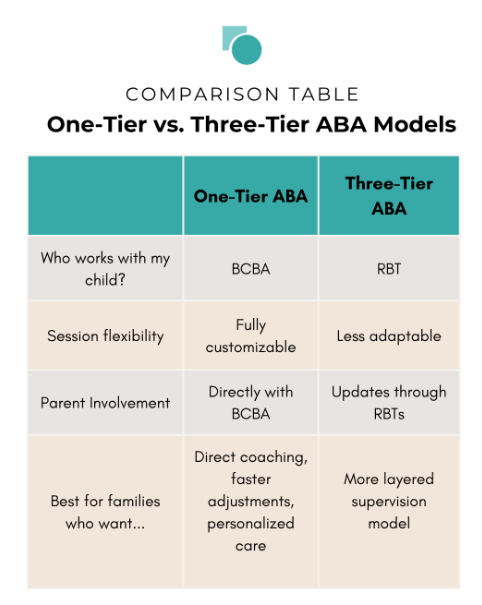
In the Bay Area, families working with us access BCBA-direct in-home ABA therapy, meaning a Board Certified Behavior Analyst designs and delivers every session, rather than delegating to a technician. For young children between the ages of two and four, this direct clinical involvement during the most critical developmental window can make a meaningful difference.
In-home therapy has particular advantages for toddlers. Children learn best in the environments they actually live in at home, with their family's routines, their own toys, and the people they love around them. Sessions typically run in the morning hours, which tend to align with toddlers' peak alertness and work naturally around daycare and preschool schedules.
Families in San Francisco, Palo Alto, San Mateo, Redwood City, Los Altos, Cupertino, and San Jose can access this model of care without long-term contracts and with superbill support to help offset the cost of private-pay therapy.
You Don't Have to Have All the Answers Right Now

Here's what we want you to take away from this post: you don't have to know. You don't have to have a diagnosis to take the next step. You don't have to be certain that something is wrong to ask questions.
What you do have to do and what you're clearly already doing is pay attention. The fact that you're asking this question means you're the kind of parent who shows up. That's the most important thing.
If you're noticing signs that concern you, the next step is simple: talk to your pediatrician, ask for a referral, and in the meantime, reach out to early intervention services in your area. If you're in the Bay Area and wondering whether in-home ABA therapy might be right for your family, we'd love to talk. No pressure, no commitment.
A short conversation costs nothing. And it might just be the thing that moves you from uncertain and scared to informed and ready.
Frequently Asked Questions
How do I know if my toddler has autism?
Only a qualified professional, typically a developmental pediatrician, psychologist, or licensed diagnostician, can diagnose autism. However, early signs that are worth discussing with your child's doctor include limited eye contact, not responding to their name, delayed speech or babbling, not pointing or gesturing, and repetitive behaviors. If you're noticing a pattern of these signs, ask your pediatrician for a referral to a developmental specialist.
What's the difference between a speech delay and autism?
A speech delay means a child isn't producing expected words or phrases for their age. Autism can involve speech delays, but it also typically involves broader differences in social communication like reduced eye contact, fewer gestures, and less back-and-forth engagement. A child with only a speech delay often communicates in other ways; a child with autism may show reduced overall communication, verbal and non-verbal. A developmental evaluation can help clarify the picture.
At what age is autism usually diagnosed?
Many children are diagnosed with autism between 18 months and 3 years of age, though some aren't identified until later. The AAP recommends autism-specific screening at 18 and 24 months. Early diagnosis matters because children's brains are most responsive to intervention during the first several years of life and earlier support is associated with better long-term outcomes.